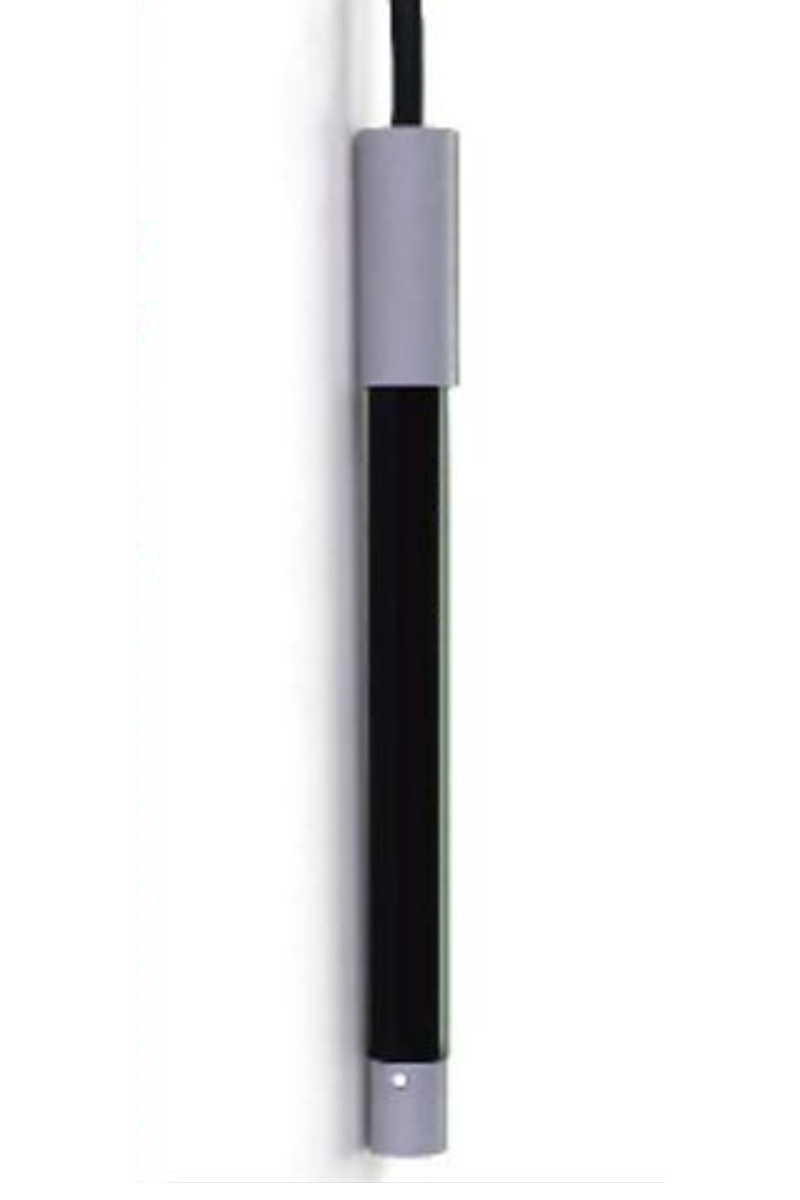
Cl-100 Chloride Ion-Selective Electrode
Ion-selective electrode for measuring chloride (Cl⁻) concentration in water. Essential for water quality monitoring, wastewater treatment, and industrial process control.
$559.99USD
Product Highlights
View all in Specifications tabOverview
The Cl-100 is a precision ion-selective electrode specifically designed for measuring chloride (Cl⁻) concentration in water and wastewater. This reliable sensor is essential for monitoring salt content, corrosion potential, and water quality in municipal water systems, industrial processes, and environmental applications.
Key Features
- High Selectivity: Specifically designed for chloride ion detection
- Wide Range: Measures from 1.8 to 35,500 mg/L (ppm)
- Digital Output: RS485 Modbus RTU for seamless integration with SCADA and IoT systems
- Fast Response: Results within 30 seconds
- Automatic Temperature Compensation: Integrated PT1000 sensor for accurate readings
- Direct Connection: Connect directly to computer or PLC without additional instrumentation
- High Protection: IP68 waterproof rating ensures reliable operation
Applications
- Municipal drinking water monitoring
- Wastewater treatment plants
- Seawater and brackish water analysis
- Cooling tower water treatment
- Boiler feedwater monitoring
- Food and beverage processing
- Pharmaceutical manufacturing
- Concrete corrosion assessment
- Environmental monitoring
- Aquaculture systems
Technical Specifications
The Cl-100 delivers precise chloride measurements from 1.8 to 35,500 mg/L with automatic temperature compensation via the integrated PT1000 sensor. The silver chloride membrane provides excellent selectivity for chloride ions in complex water matrices, from freshwater to full-strength seawater (~19,400 mg/L Cl⁻).
The fast response time of less than 30 seconds enables real-time monitoring and rapid process adjustments. The wide measurement range spans from trace-level freshwater monitoring to concentrated brine solutions.
Chloride in Water Systems
Chloride (Cl⁻) is one of the most common anions in natural water. Sources include:
- Natural dissolution: Halite (rock salt), sylvite, and other evaporite minerals
- Seawater intrusion: Coastal aquifers affected by saltwater ingress
- Road deicing: Rock salt and calcium chloride from winter maintenance
- Industrial discharge: Chemical manufacturing, oil and gas produced water
- Wastewater effluent: Human waste, water softener regeneration brine
- Agricultural practices: Irrigation return flow, potash fertilizers
Chloride Concentration Reference Values
Regulatory Standards:
| Application | Chloride Level |
|---|---|
| US EPA secondary limit (drinking water) | 250 mg/L |
| EU Directive (drinking water) | 250 mg/L |
| WHO guideline | No health-based limit; 250 mg/L taste threshold |
| Freshwater aquatic life | < 230 mg/L (chronic), < 860 mg/L (acute) |
| Irrigation water (sensitive crops) | < 140 mg/L |
| Concrete mix water (EN 1008) | < 500-1,000 mg/L |
Natural Water Ranges:
- Pristine freshwater: 1 - 20 mg/L Cl⁻
- Typical river water: 10 - 100 mg/L Cl⁻
- Brackish water: 1,000 - 10,000 mg/L Cl⁻
- Seawater: ~19,400 mg/L Cl⁻
- Brine: > 35,000 mg/L Cl⁻
Corrosion Monitoring Applications
Chloride is the primary driver of pitting corrosion in stainless steel and reinforced concrete:
Water Distribution Systems:
- Monitor chloride-to-sulfate mass ratio (CSMR) - values > 0.5 increase lead release from solder
- Track seasonal changes from road salt runoff entering source water
- Detect saltwater intrusion in coastal wellfields
Cooling Tower Water:
- Chloride concentrates during evaporative cooling (cycles of concentration)
- High chloride accelerates corrosion of heat exchangers and condenser tubes
- Monitor blowdown to maintain chloride below equipment tolerance limits
Concrete and Infrastructure:
- Chloride ingress causes rebar corrosion and structural degradation
- Critical threshold: 0.2-0.4% Cl⁻ by cement weight triggers corrosion initiation
- Monitor concrete pore water in bridges, parking structures, marine infrastructure
Aquaculture and Salinity Applications
Chloride is the dominant anion in salinity measurement:
Marine/Brackish Aquaculture:
- Monitor salinity stability in shrimp ponds and fish tanks
- Detect freshwater intrusion or evaporative concentration
- Track salinity gradients in estuarine systems
- Verify salt mixing in inland saline aquaculture
Freshwater Aquaculture:
- Low-level salt addition (1-3 g/L NaCl) reduces nitrite toxicity in fish
- Monitor chloride-to-nitrite ratio for fish health management
- Detect contamination from salt runoff or groundwater intrusion
Salinity Relationship:
- Salinity (ppt) ≈ Chloride (mg/L) × 0.0018 (approximation for NaCl-dominated waters)
- Seawater: ~35 ppt salinity ≈ 19,400 mg/L Cl⁻
Interference Factors
The Cl-100 silver chloride membrane is selective for chloride, but users should be aware of:
- Bromide (Br⁻): Cross-sensitivity exists; significant in seawater or brominated water systems
- Iodide (I⁻): Strong interference at concentrations above 0.1× the chloride level
- Sulfide (S²⁻): Can poison the membrane surface - avoid in anaerobic environments or pre-treat samples
- Cyanide (CN⁻): Interferes at high concentrations (industrial applications)
For most freshwater, drinking water, and aquaculture applications, these interferences are negligible.
Installation and Calibration
Positioning: Install in a representative flow area with consistent water contact. For distribution systems, install after any chemical injection points. For aquaculture, install in the main circulation path away from freshwater inlets.
Calibration: Two-point calibration using NaCl standard solutions:
- Freshwater applications: 10 mg/L and 250 mg/L standards
- Brackish/marine applications: 1,000 mg/L and 20,000 mg/L standards
- Recalibrate every 2-4 weeks depending on fouling conditions
Maintenance: Clean the membrane surface monthly with dilute HNO3 or a soft brush to remove deposits. Rinse thoroughly with deionized water. The silver chloride membrane typically lasts 12+ months under normal conditions.
Connectivity and Integration
The Cl-100 supports dual output for flexible system integration:
RS485 Modbus RTU:
- Connect to Agrinovo Omni Genesis or Exodus controllers
- Multi-drop bus networking (up to 32 sensors per bus)
- Standard Modbus registers for chloride concentration and temperature
- Compatible with SCADA, PLC, and IoT gateway systems
RS485 Modbus RTU Output:
- Direct connection to traditional controllers and data loggers
- Scalable output range mapped to measurement range
- Ideal for blowdown control, dosing systems, or alarm triggers
IoT Integration:
- Pair with Omni Genesis/Exodus for cloud-based chloride monitoring
- Set automated alerts for threshold exceedances
- Historical data logging for trend analysis and regulatory reporting
- Integrate with valve controls for automated blowdown or freshwater addition
Complementary Monitoring
For comprehensive water quality, pair the Cl-100 with:
- EC sensor (EC-100): Conductivity correlates with total dissolved solids including chloride
- Na-100: Sodium and chloride together characterize NaCl-dominated salinity
- pH sensor (PH-100): pH affects corrosion rates in combination with chloride
- ORP sensor (ORP-100): Oxidation potential plus chloride indicates corrosion risk
- NO2-100: Chloride-to-nitrite ratio management in freshwater aquaculture
Part of our IoT Aquaculture Monitoring System
See how our aquaculture sensors work together in a complete real-time water quality monitoring system for fish farming.
Related Products
Other solutions in the Ion Selective probes category