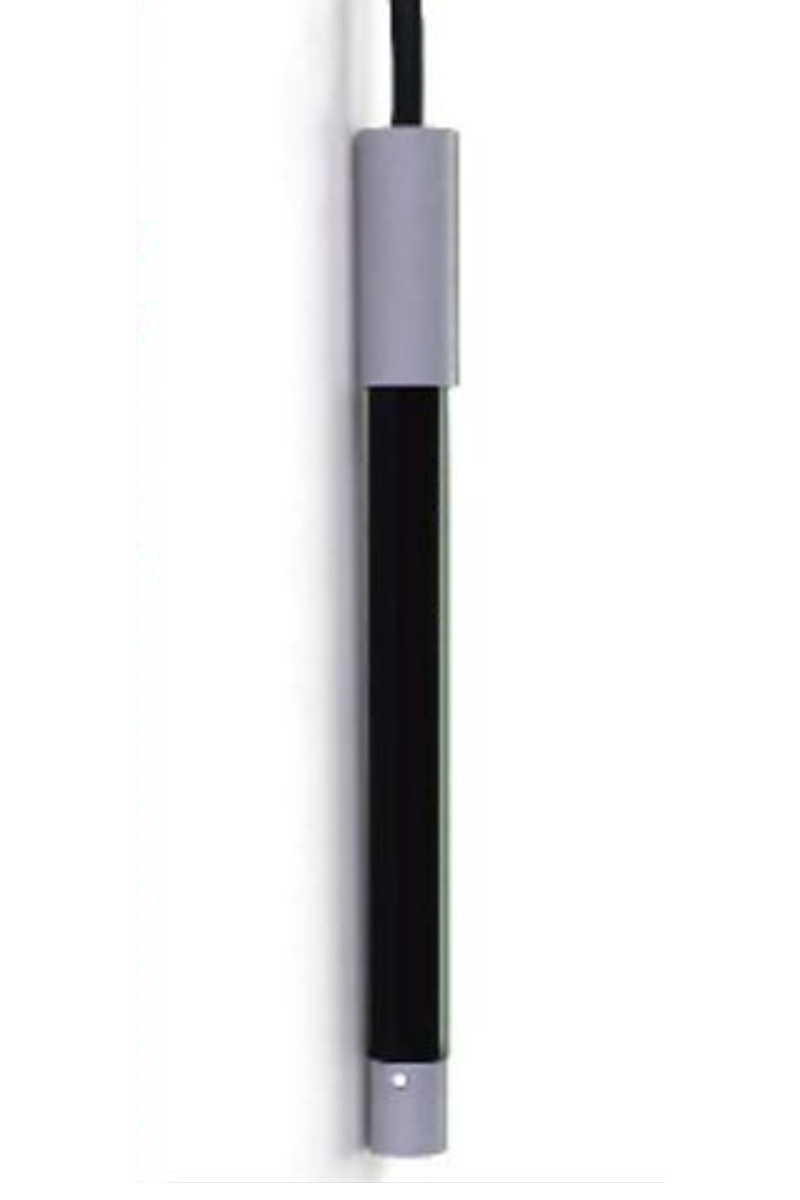
NH3-100 Ammonia Gas-Sensing Electrode
Gas-sensing electrode for measuring dissolved ammonia (NH3) in water. Essential for aquaculture, wastewater treatment, and industrial applications.
$559.99USD
Product Highlights
View all in Specifications tabOverview
The NH3-100 is an advanced gas-sensing electrode specifically designed for measuring dissolved ammonia (NH3) in water. Unlike standard ammonium electrodes, this sensor measures the un-ionized ammonia form, which is particularly toxic to aquatic life. This makes it essential for aquaculture, wastewater treatment, and environmental monitoring.
Key Features
- Gas-Sensing Technology: Measures dissolved ammonia (NH3), not just ammonium ions
- Wide Range: Measures from 0.05 to 1,400 mg/L (ppm)
- Digital Output: RS485 Modbus RTU for seamless integration with SCADA and IoT systems
- Fast Response: Results within 60 seconds
- Automatic Temperature Compensation: Integrated PT1000 sensor for accurate readings
- Direct Connection: Connect directly to computer or PLC without additional instrumentation
- High Protection: IP68 waterproof rating ensures reliable operation
Applications
- Aquaculture and fish farming
- Shrimp farming systems
- Wastewater treatment plants
- Industrial effluent monitoring
- Environmental water testing
- Hydroponic systems
- Biogas production
- Agricultural runoff assessment
- Drinking water source monitoring
- Laboratory analysis
Technical Specifications
The NH3-100 delivers precise dissolved ammonia measurements from 0.05 to 1,400 mg/L with automatic temperature compensation. The gas-sensing membrane selectively detects NH3 molecules that diffuse across the membrane, providing specific measurements of the toxic un-ionized form. Unlike ion-selective electrodes that measure NH4⁺, the gas-sensing design is unaffected by dissolved cations, providing true NH3 readings without chemical interference.
Understanding Ammonia vs. Ammonium
In water, total ammonia nitrogen (TAN) exists in two forms:
- NH3 (Ammonia): Un-ionized form, highly toxic to fish and aquatic organisms
- NH4⁺ (Ammonium): Ionized form, significantly less toxic
The ratio between these forms depends on pH and temperature:
- At pH 7.0, 25°C: ~0.6% exists as toxic NH3
- At pH 8.0, 25°C: ~5.4% exists as toxic NH3
- At pH 9.0, 25°C: ~36% exists as toxic NH3
Higher pH and higher temperature both shift the equilibrium toward the toxic NH3 form. The NH3-100 specifically measures this dangerous fraction, making it critical for aquaculture operations where pH can fluctuate.
Ammonia Toxicity Thresholds in Aquaculture
Understanding NH3 limits is essential for preventing fish kills:
Freshwater Fish:
- Safe: < 0.02 mg/L NH3
- Stress onset: 0.02 - 0.05 mg/L NH3
- Sublethal effects: 0.05 - 0.2 mg/L NH3 (reduced growth, immune suppression)
- Lethal: > 0.2 mg/L NH3 (species-dependent)
Shrimp (Penaeus/Litopenaeus):
- Safe: < 0.1 mg/L NH3
- Chronic stress: 0.1 - 0.5 mg/L NH3
- Acute toxicity: > 1.0 mg/L NH3
Salmonids (trout, salmon):
- Safe: < 0.012 mg/L NH3 (most sensitive species)
- EU regulatory limit: 0.025 mg/L NH3
The NH3-100’s low detection limit of 0.05 mg/L allows early detection before concentrations reach damaging levels.
pH and Temperature Effects on Ammonia Toxicity
The fraction of toxic NH3 increases dramatically with pH and temperature:
| pH | 15°C | 20°C | 25°C | 30°C |
|---|---|---|---|---|
| 7.0 | 0.3% | 0.4% | 0.6% | 0.8% |
| 7.5 | 0.9% | 1.2% | 1.7% | 2.5% |
| 8.0 | 2.8% | 3.8% | 5.4% | 7.5% |
| 8.5 | 8.5% | 11.2% | 15.3% | 20.3% |
| 9.0 | 22.8% | 28.4% | 36.3% | 42.5% |
This table shows why continuous NH3 monitoring is essential - a small pH increase can multiply the toxic ammonia concentration several times.
Ammonia Sources in Aquaculture Systems
Common ammonia sources that the NH3-100 helps you track:
- Fish metabolism: Ammonia excreted through gills and urine (primary source)
- Uneaten feed: Decomposing feed releases nitrogen compounds
- Dead organisms: Decaying fish, algae, and organic matter
- Biofilter failure: Nitrifying bacteria disruption in RAS systems
- Overfeeding: Excess protein increases ammonia production
- Overcrowding: Higher biomass density increases ammonia load
Installation and Calibration
The NH3-100 is designed for continuous inline monitoring or portable spot-checking:
Mounting: Submersible with IP68 protection. Install in a representative flow area, avoiding dead zones and air pockets. The sensor should be positioned where water circulates naturally past the gas-sensing membrane.
Calibration: Two-point calibration using standard ammonia solutions. Calibrate at concentrations bracketing your expected range. Recalibrate every 2-4 weeks depending on the application. In high-fouling environments, weekly cleaning and calibration is recommended.
Maintenance: Clean the gas-permeable membrane periodically to prevent biofilm buildup. Inspect the membrane for damage or clogging. Replace the membrane cap according to the maintenance schedule.
Connectivity and Integration
The NH3-100 supports dual output for flexible system integration:
RS485 Modbus RTU:
- Connect to Agrinovo Omni Genesis or Exodus controllers
- Multi-drop bus networking (up to 32 sensors per bus)
- Standard Modbus registers for ammonia concentration and temperature
- Compatible with SCADA, PLC, and IoT gateway systems
RS485 Modbus RTU Output:
- Direct connection to traditional controllers and data loggers
- Scalable output range mapped to measurement range
- Loop-powered or externally powered configurations
IoT Integration:
- Pair with Omni Genesis/Exodus for cloud-based ammonia monitoring
- Set automated alerts when NH3 exceeds safe thresholds
- Log historical data for trend analysis and regulatory reporting
- Trigger aeration, water exchange, or feeding adjustments automatically
Complementary Monitoring
For comprehensive nitrogen cycle management, pair the NH3-100 with:
- NH4-100: Monitor total ammonium for complete nitrogen tracking
- pH sensor (PH-100): pH directly affects NH3/NH4⁺ ratio
- DO sensor (DO-100): Oxygen levels affect nitrification efficiency
- Temperature probe: Temperature affects both toxicity and bacterial activity
- NO2-100 / NO3-100: Track nitrite and nitrate for full nitrification monitoring
Part of our IoT Aquaculture Monitoring System
See how our aquaculture sensors work together in a complete real-time water quality monitoring system for fish farming.
Related Products
Other solutions in the Ion Selective probes category